Updated: 25 Apr 2026
QA AI Automation in 2026 is about speed and reliability: using AI to reduce manual effort (scaffolding, maintenance, triage) without creating flaky tests or fake confidence.
TL;DR
- Use AI to generate scaffolding, not to invent “truth.”
- Get the fastest ROI by applying AI to failure triage and log summarization.
- Keep deterministic assertions and risk-based coverage as your release foundation.
1) Test design: requirements → risk-based coverage
AI can convert PRDs and tickets into test charters, edge cases, and coverage maps. A senior QA engineer still owns the final call, but the time savings are huge.
2) Test implementation: generate the boring parts
- Playwright/Cypress skeleton tests
- API contract tests (schema validations)
- fixtures, test data builders, page objects
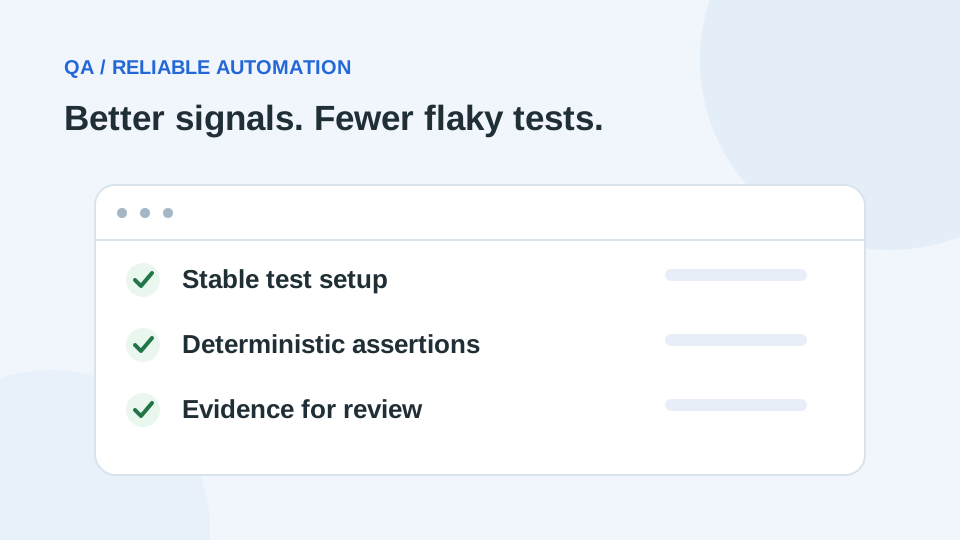
Guardrails that prevent flakiness: stable locators, explicit assertions, deterministic setup/teardown, and consistent test patterns.
3) Self-healing UI tests (safe mode)
Allow AI to propose selector fixes, but require review for critical flows. Never let AI auto-adjust assertions just to make failures disappear.
4) Failure triage: biggest win for most teams
AI can cluster similar failures, summarize logs/screenshots, and correlate with recent code changes. That reduces mean-time-to-triage and helps teams ship faster.
Metrics that prove it’s working
- Flaky test rate
- Time from failure → root cause
- Escaped defects (by severity)
- Human review time for AI-suggested changes