Updated: 25 Apr 2026
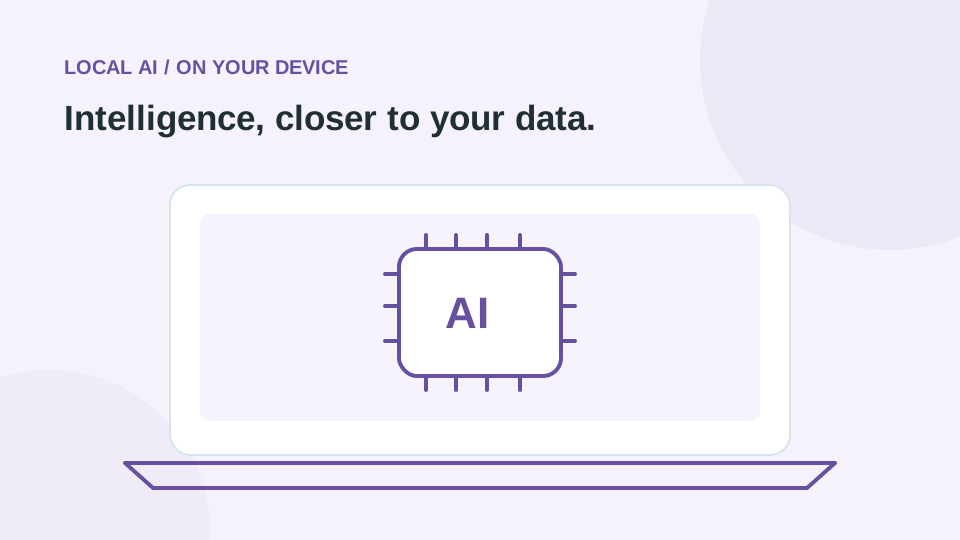
Gemma 4 is part of a bigger 2026 trend: local-first AI. Teams want AI that can run where the work happens, sometimes entirely offline, with strong control over data and cost.
TL;DR
- Local-first AI is back because privacy, latency, and reliability are business requirements.
- Open models are increasingly “agent-ready” (function calling, structured outputs).
- You gain flexibility, but you also own evaluation and safety controls.
What Gemma 4 represents
Gemma 4 is positioned as an open model family designed for strong capability per parameter, plus features that matter for real systems:
- Function calling for tool use and automation pipelines
- Structured outputs (JSON) for reliable integration
- Deployment flexibility across different hardware setups
- Permissive licensing so companies can build and ship products
When local-first AI is the right call
- Private data: internal docs, customer logs, regulated workflows.
- Low latency UX: copilots and assistants that must respond fast.
- Offline constraints: labs, field teams, secure networks.
- Predictable cost: high-volume automation where API costs can spike.
Where QA and automation teams can use local models
- Summarizing CI logs and clustering failures without shipping logs to third parties.
- Generating test scaffolds locally for sensitive repositories.
- Building “triage copilots” that work even when the internet is unreliable.
The tradeoff (be honest about this)
Running open models means your team owns the guardrails: eval sets, monitoring, access control, and misuse prevention.